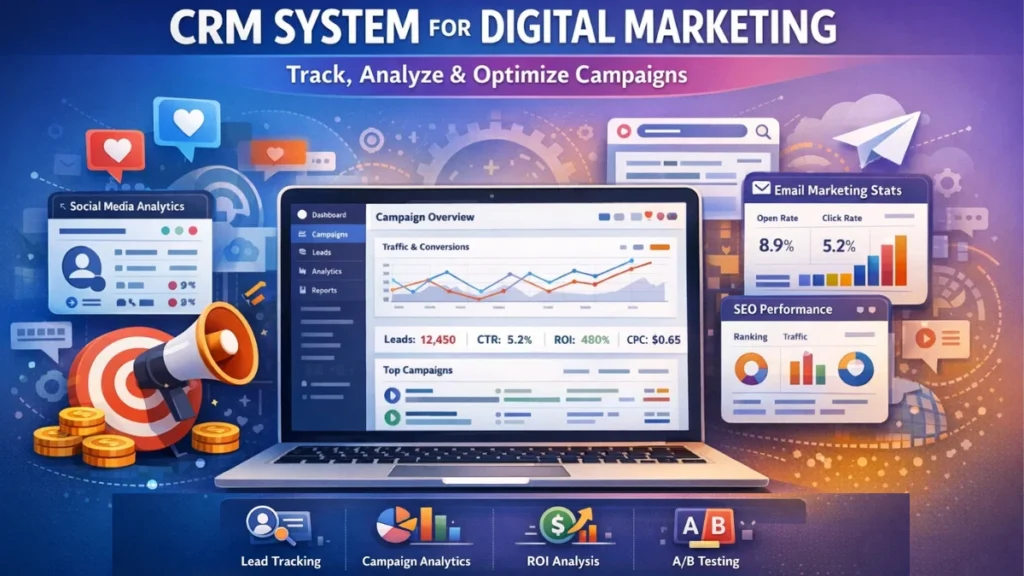

In today’s data-driven digital world, marketing success is no longer about running ads blindly. It’s about tracking every interaction, analyzing user behavior, and optimizing campaigns in real time. This is where a CRM (Customer Relationship Management) system for digital marketing becomes a game-changer.
A modern CRM doesn’t just store customer data—it acts as the central brain of your marketing strategy, helping you understand your audience, personalize campaigns, and increase ROI across channels like email, social media, search ads, and websites.
This article explains how CRM systems help digital marketers track, analyze, and optimize campaigns, and why they are essential for sustainable growth.
What Is a CRM System in Digital Marketing?
A CRM system is software designed to collect, manage, and analyze customer data throughout the entire customer journey—from the first website visit to repeat purchases and long-term loyalty.
In digital marketing, a CRM integrates with platforms such as:
- Email marketing tools
- Social media ads
- Websites and landing pages
- Lead forms and chatbots
- Sales and customer support systems
The goal is simple: turn raw customer data into actionable marketing insights.
Why Digital Marketing Needs a CRM System
Without a CRM, marketers often face:
- Scattered customer data
- Poor lead follow-up
- Limited campaign visibility
- Generic, non-personalized messaging
- Difficulty measuring ROI
A CRM solves these issues by providing a single source of truth for all customer interactions.
Key Benefits for Marketers
- Better audience targeting
- Higher conversion rates
- Personalized customer experiences
- Improved campaign performance
- Smarter budget allocation
Tracking Campaign Performance with a CRM System
Centralized Data Collection
A CRM automatically tracks:
- Website visits
- Email opens and clicks
- Ad interactions
- Form submissions
- Purchase history
All this data is stored in one place, giving marketers a 360-degree view of each customer.
Lead Source Tracking
CRM systems show exactly where leads come from:
- Google Ads
- Facebook or Instagram campaigns
- Organic search
- Email newsletters
- Referral traffic
This helps marketers identify which channels generate the highest-quality leads, not just traffic.
Customer Journey Tracking
With CRM tools, you can track:
- First interaction
- Follow-up actions
- Conversion points
- Post-purchase behavior
This visibility helps marketers understand what works and what causes drop-offs.
Analyzing Marketing Data Using CRM Insights
Real-Time Analytics Dashboards
Most CRM systems offer visual dashboards that display:
- Campaign performance metrics
- Lead conversion rates
- Email engagement
- Sales attribution
- Customer lifetime value
These dashboards eliminate guesswork and enable data-backed decision-making.
Audience Segmentation
CRM systems allow marketers to segment audiences based on:
- Demographics
- Location
- Buying behavior
- Engagement level
- Past telling
With better segmentation, marketers can send highly relevant messages instead of one-size-fits-all campaigns.
Campaign Attribution Analysis
A CRM shows which marketing efforts actually drive results by answering questions like:
- Which ad led to the sale?
- Which email influenced the decision?
- How long did the conversion take?
This insight helps optimize future campaigns and justify marketing spend.
Optimizing Digital Marketing Campaigns with CRM Automation
Personalized Marketing at Scale
CRM systems enable personalization such as:
- Personalized email subject lines
- Product recommendations
- Custom landing pages
- Tailored follow-up messages
Personalization increases engagement, trust, and conversions.
Marketing Automation Workflows
With CRM automation, marketers can:
- Send welcome emails automatically
- Nurture leads through email sequences
- Trigger messages based on user behavior
- Re-engage inactive customers
This saves time and ensures consistent communication without manual effort.
A/B Testing and Optimization
CRM tools help test:
- Email subject lines
- CTA buttons
- Campaign timing
- Messaging tone
By analyzing results, marketers can continuously optimize campaigns for better performance.
CRM Integration with Digital Marketing Channels
Email Marketing Integration
CRM systems sync with email campaigns to track:
- Open rates
- Click-through rates
- Conversions
- Unsubscribes
This helps refine email strategy and improve deliverability.
Social Media and Paid Ads Tracking
CRMs integrate with social platforms to:
- Capture leads from ads
- Track ad engagement
- Measure ROI by campaign
Marketers can quickly identify which ads generate real business results.
Website and Landing Page Tracking
By connecting a CRM to your website, you can:
- Monitor visitor behavior
- Track form submissions
- Identify high-intent users
This data helps create conversion-optimized landing pages.
How CRM Improves Lead Management and Sales Alignment
Lead Scoring
CRM systems assign scores based on:
- Engagement level
- Website activity
- Email interactions
High-scoring leads can be prioritized for sales, increasing close rates.
Sales and Marketing Alignment
When sales and marketing teams share the same CRM:
- Leads are followed up faster
- Messaging stays consistent
- Customer experience improves
This alignment boosts revenue and reduces lost opportunities.
Choosing the Right CRM for Digital Marketing
When selecting a CRM, marketers should look for:
- Easy integration with marketing tools
- Automation and workflow features
- Advanced reporting and analytics
- Customizable dashboards
- Scalability for future growth
A CRM should grow with your business, not limit it.
Common CRM Mistakes Digital Marketers Should Avoid
- Using CRM only as a contact database
- Ignoring data hygiene and updates
- Over-automating without personalization
- Not training teams properly
- Failing to analyze CRM reports
Avoiding these mistakes ensures maximum ROI from your CRM investment.
The Future of CRM in Digital Marketing
CRM systems are evolving rapidly with:
- AI-powered predictions
- Behavior-based targeting
- Advanced personalization
- Real-time customer insights
In the future, CRM will not just support marketing—it will drive the entire customer experience strategy.
Conclusion
A CRM system is no longer optional for digital marketing—it is essential. By enabling marketers to track, analyze, and optimize campaigns, CRM tools turn data into growth opportunities.
From better targeting and automation to improved ROI and customer relationships, CRM systems empower marketers to work smarter, not harder. Businesses that effectively use CRM technology gain a powerful competitive advantage in an increasingly crowded digital marketplace.
FAQs
What is the main role of CRM in digital marketing?
The main role is to track customer interactions, analyze campaign data, and optimize marketing strategies for better engagement and conversions.
Can small businesses use CRM for marketing?
Yes, CRM systems are highly beneficial for small businesses as they improve lead management, personalization, and marketing efficiency.
Does CRM help improve ROI?
Absolutely. CRM systems help identify high-performing channels and campaigns, ensuring smarter budget allocation.
Is CRM useful for both B2B and B2C marketing?
Yes, CRM systems work effectively for both B2B and B2C by managing leads, nurturing relationships, and improving customer retention.
How does CRM improve personalization?
CRM uses customer data and behavior insights to deliver tailored messages, offers, and experiences.