
In today’s competitive digital world, understanding your customers is more important than ever. Businesses no longer succeed by simply selling products or services—they succeed by building strong, long-lasting relationships. This is where CRM comes in.
CRM helps businesses organise customer data, track interactions, and use insights to market smarter and sell better. Whether you are a marketer, business owner, or entrepreneur, understanding CRM can help you improve customer satisfaction, increase sales, and grow your business.
This article explains what CRM is, its definition, key benefits, and how CRM tools help marketers and businesses succeed.
What Is CRM? (Definition)
CRM stands for Customer Relationship Management.
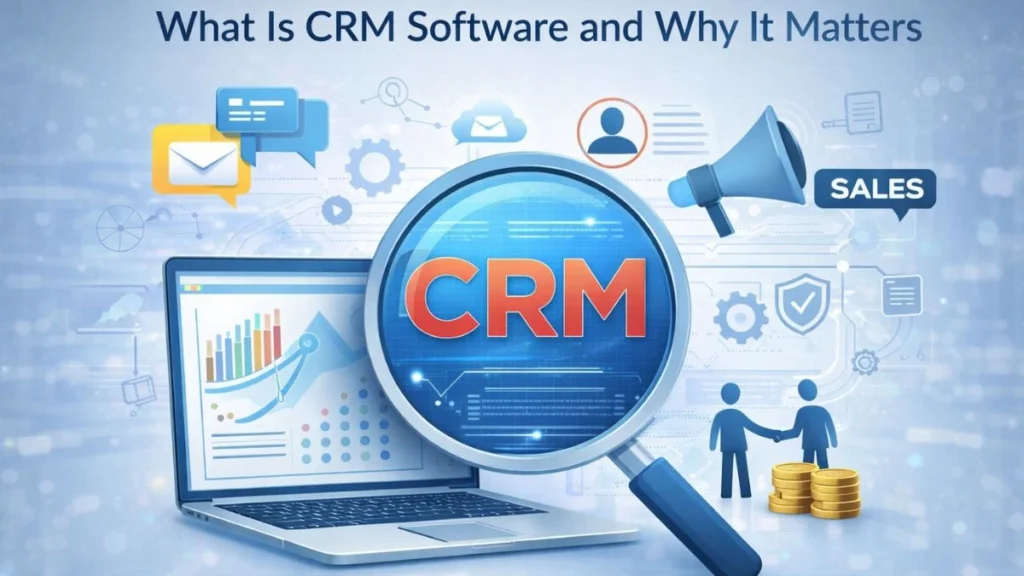
CRM is the process of managing interactions with current and potential customers throughout the sales and marketing journey. It involves collecting, organising, and using customer data to improve relationships, personalise communication, and increase customer value.
In simple terms, CRM helps businesses understand who their customers are, what they need, and how to serve them better.
What Does CRM Include?
CRM can refer to:
- A strategy for managing customer relationships
- A process for tracking customer interactions
- A software or tool that stores and analyses customer data
Most commonly, CRM refers to CRM software, which centralises customer information in one place.
What Is CRM Software?
CRM software is a digital tool that helps businesses:
- Store customer contact details
- Track emails, calls, and meetings
- Monitor sales pipelines
- Analyse customer behaviour
- Automate marketing and follow-ups
Popular CRM tools help teams work smarter by providing a 360-degree view of the customer.
Why Is CRM Important for Businesses?
Without CRM, customer information is often scattered across spreadsheets, emails, and notes. This leads to missed opportunities, poor communication, and lost customers.
CRM systems solve this problem by:
- Centralising customer data
- Improving communication across teams
- Helping businesses make data-driven decisions
CRM for Marketers: Why It Matters
For marketers, CRM is a powerful tool that helps:
- Understand audience data
- Segment customers into meaningful groups
- Deliver personalised campaigns
- Track marketing performance
CRM allows marketers to move from guesswork to insight-driven marketing.
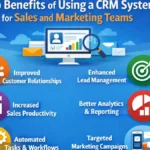
Key Benefits of CRM
1. Better Customer Understanding
CRM collects customer data such as:
- Purchase history
- Website activity
- Email engagement
- Support interactions
This data helps businesses understand customer needs, preferences, and behaviour.
2. Improved Customer Relationships
By tracking every interaction, CRM ensures:
- Consistent communication
- Faster responses
- More personalised experiences
Happy customers are more likely to stay loyal.
3. Smarter Marketing Campaigns
CRM enables:
- Targeted email campaigns
- Personalised offers
- Customer segmentation
This improves conversion rates and reduces marketing waste.
4. Increased Sales and Revenue
CRM helps sales teams:
- Track leads and opportunities
- Prioritise high-value prospects
- Close deals faster
This directly impacts revenue growth.
5. Better Team Collaboration
CRM systems allow marketing, sales, and customer support teams to:
- Share customer information
- Avoid duplication
- Work toward common goals
6. Improved Customer Retention
By understanding customer needs and addressing issues early, CRM helps:
- Reduce churn
- Increase repeat purchases
- Build long-term loyalty
7. Data-Driven Decision Making
CRM dashboards and reports help managers:
- Track performance
- Identify trends
- Make informed business decisions
How CRM Works (Step by Step)
- Collect customer data from websites, emails, social media, and sales interactions
- Store data centrally in the CRM system
- Analyse customer behaviour using reports and insights
- Automate actions such as follow-ups and reminders
- Improve relationships through personalised communication
CRM for Small vs Large Businesses
Small Businesses
- Manage contacts and leads
- Improve customer follow-ups
- Save time through automation
Large Businesses
- Handle complex customer journeys
- Integrate marketing, sales, and support
- Analyse large volumes of data
CRM is scalable and benefits businesses of all sizes.
CRM and Digital Marketing
CRM plays a key role in digital marketing by:
- Connecting email marketing tools
- Tracking campaign results
- Measuring customer lifetime value
This allows marketers to optimise strategies and improve ROI.
Common Types of CRM
1. Operational CRM
Focuses on sales, marketing, and service automation.
2. Analytical CRM
Focuses on data analysis and customer insights.
3. Collaborative CRM
Focuses on communication across teams and channels.
Challenges of Using CRM
While CRM offers many benefits, challenges include:
- Poor user adoption
- Data quality issues
- Lack of training
These can be overcome with proper strategy and employee engagement.
Best Practices for Using CRM Effectively
- Keep data clean and updated
- Train employees regularly
- Align CRM with business goals
- Use insights, not just data
Conclusion
CRM is more than just software—it is a strategy for building stronger customer relationships. By using CRM tools, businesses can understand their audience better, market smarter, and grow sustainably.
Whether you are a marketer or business owner, investing in CRM helps you stay competitive, customer-focused, and data-driven.
❓ Frequently Asked Questions (FAQs)
1. What does CRM stand for?
CRM stands for Customer Relationship Management.
2. What is CRM in simple words?
CRM is a way to manage customer information and interactions to build better relationships.
3. Is CRM only software?
No. CRM is a strategy, but it is most commonly implemented using software.
4. Who uses CRM?
Marketers, sales teams, customer support teams, and business owners use CRM.
5. What are the main benefits of CRM?
Better customer relationships, improved sales, smarter marketing, and higher customer retention.