
In today’s digital-first business environment, customer data is one of the most valuable assets a company can have. However, collecting data alone is not enough. Businesses need a way to organise, understand, and use customer information effectively. This is where CRM software plays a crucial role.
CRM (Customer Relationship Management) software helps businesses manage customer interactions, improve collaboration across teams, and deliver personalised customer experiences. From marketing automation to sales tracking, CRM systems serve as a central hub for customer data, helping businesses grow smarter and faster.
This article explores the key features of CRM software, explains what a CRM system does, and shows why CRM is important for marketers and businesses of all sizes.
What Is CRM Software?
CRM software is a tool designed to collect, store, manage, and analyse customer data. It brings together information from multiple channels—such as email, social media, websites, and sales interactions—into one unified platform.
Instead of scattered spreadsheets and disconnected tools, CRM software provides a single source of truth for all customer-related data.
What Does a CRM System Do?
In simple terms, a CRM system acts as a central hub for audience data and insights. It helps businesses:
- Track customer interactions
- Organise contact information
- Manage sales pipelines
- Automate marketing tasks
- Improve customer service
CRM systems enable seamless collaboration between sales, marketing, and customer service teams.
Key Features of CRM Software
1. Contact Management
Contact management is the foundation of any CRM system. It allows businesses to:
- Store customer names, emails, phone numbers, and social profiles
- Track interaction history
- View customer details in one place
This helps teams build stronger, more informed relationships.
2. Customer Segmentation
CRM software allows marketers to segment customers based on:
- Demographics
- Purchase behaviour
- Engagement history
- Preferences
Segmentation enables personalised marketing, which increases engagement and conversion rates.
3. Marketing Automation
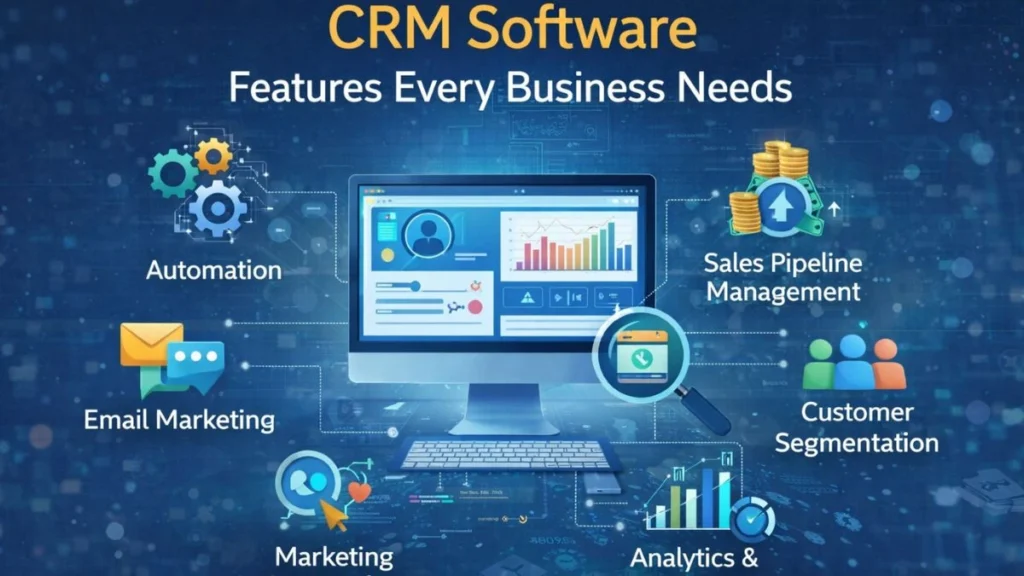
Marketing automation is one of the most powerful CRM features. It includes:
- Email marketing
- Drip marketing campaigns
- Automated follow-ups
- Workflow automation
These tools help marketers deliver the right message at the right time, without manual effort.
4. Sales Pipeline Management
CRM systems help sales teams:
- Track leads and opportunities
- Monitor deal stages
- Forecast revenue
- Improve sales performance
Sales reps can quickly view past interactions and purchases before contacting a prospect.
5. Customer Service and Support Tools
CRM software provides support teams with:
- Customer history and contact details
- Case management tools
- Faster response capabilities
This leads to better customer service and higher satisfaction.
6. Data Analytics and Reporting
CRM systems generate valuable insights through:
- Performance dashboards
- Customer behaviour reports
- Campaign tracking
Data-driven insights help businesses make informed decisions.
7. Interdepartmental Collaboration
CRM software promotes collaboration by:
- Sharing customer information across teams
- Reducing data silos
- Improving internal communication
Sales, marketing, and customer service teams work together more efficiently.
8. Lead Management and Automation
CRM tools help businesses:
- Capture new leads
- Assign leads automatically
- Track lead progress
- Improve conversion rates
This saves time and increases productivity.
Why CRM Software Is Important for Marketers
Marketers collect valuable data from every campaign—clicks, views, purchases, and engagement. CRM software helps organise this data and turn it into actionable insights.
Key Benefits for Marketers
- Better audience understanding
- Improved campaign targeting
- Personalised messaging
- Higher return on investment (ROI)
CRM marketing platforms allow marketers to design smarter strategies based on real customer behaviour.
CRM and Customer Experience
CRM software helps businesses deliver:
- Consistent messaging across channels
- Personalised experiences
- Timely communication
This leads to stronger relationships and increased customer loyalty.
CRM for Small and Midsize Businesses
CRM is not just for large enterprises. In fact, 91% of companies with 10 or more employees use a CRM.
Why Small Businesses Need CRM
- Build a strong customer data foundation
- Track leads from the start
- Automate marketing and follow-ups
- Save time and resources
CRM helps small businesses compete with larger companies.
CRM ROI: The Numbers Don’t Lie
According to Nucleus Research, the average ROI on CRM is $8.71 for every dollar spent. This highlights how valuable CRM software is for driving growth and efficiency.
How CRM Helps Businesses Grow
CRM software helps businesses:
- Increase customer engagement
- Close more deals
- Improve retention
- Make smarter budget decisions
It enables businesses to focus on the right customers at the right time.
Conclusion
CRM software is more than just a tool—it is a strategic asset for managing customer relationships. By centralising customer data, automating processes, and delivering insights, CRM systems help businesses of all sizes grow smarter, faster, and more efficiently.
Whether you are a marketer, sales professional, or business owner, CRM software empowers you to build better relationships, improve performance, and gain a competitive advantage.
❓ Frequently Asked Questions (FAQs)
1. What are the key features of CRM software?
Contact management, customer segmentation, marketing automation, sales tracking, analytics, and customer support tools.
2. What does a CRM system do?
It collects, organises, and analyses customer data to improve sales, marketing, and customer service.
3. Why is CRM important for marketers?
CRM helps marketers understand customers, personalise campaigns, and improve marketing ROI.
4. Is CRM only for large businesses?
No. CRM is valuable for small, midsize, and large businesses.
5. How does CRM improve customer relationships?
By providing personalised communication, faster service, and better understanding of customer needs.
6. Can CRM automate marketing tasks?
Yes. CRM supports email marketing, drip campaigns, and automation workflows.
7. What is CRM ROI?
CRM delivers high ROI, with studies showing over $8 return for every dollar invested.
8. Does CRM improve sales performance?
Yes. CRM helps manage leads, track opportunities, and close deals faster.
9. Is CRM difficult to use?
Most modern CRM tools are user-friendly and easy to adopt with training.
10. Why should businesses invest in CRM software?
To improve efficiency, customer satisfaction, and long-term growth.